
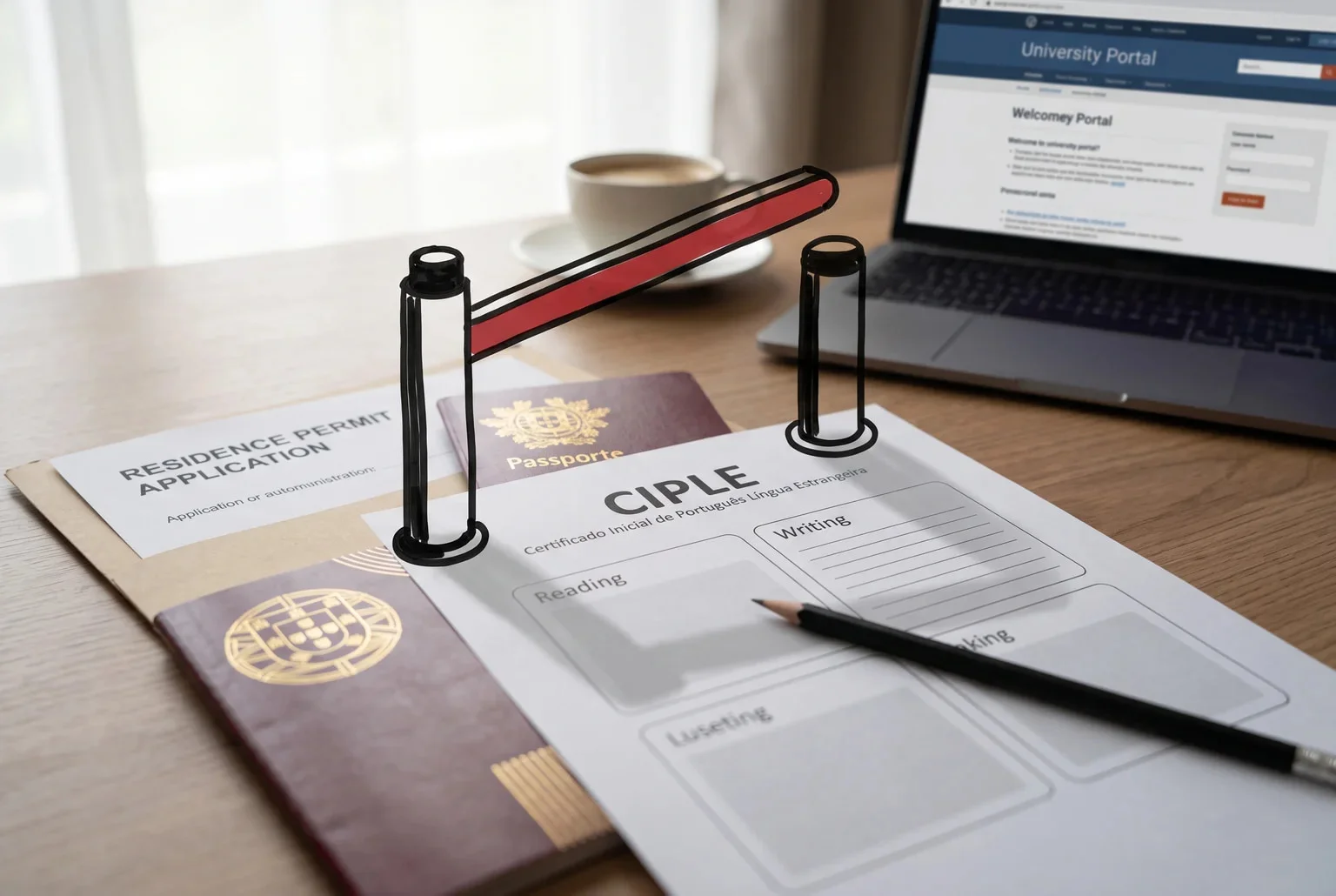
The exam standing between you and your Portuguese passport
How much Portuguese do you actually need to become a Portuguese citizen? Not fluency. Not the ability to argue about football or follow a fast conversation at a café. You need to clear one specific, government-recognised bar called CIPLE.
CIPLE stands for Certificado Inicial de Português Língua Estrangeira, an A2-level Portuguese proficiency exam under the Common European Framework of Reference for Languages. It’s administered by CAPLE, the Centro de Avaliação de Português Língua Estrangeira at the University of Lisbon, which means the certificate carries the weight of an actual university, not a private course provider grading its own homework.
For thousands of foreign residents applying for Portuguese citizenship or permanent residency, CIPLE is the exam that proves basic language proficiency to the authorities reviewing their file. It’s not the only path, and it’s not the hardest exam CAPLE offers. But if you’re stuck figuring out what it actually tests, how it’s scored, and how to register, this guide walks through it section by section.
The legal basis behind the language requirement
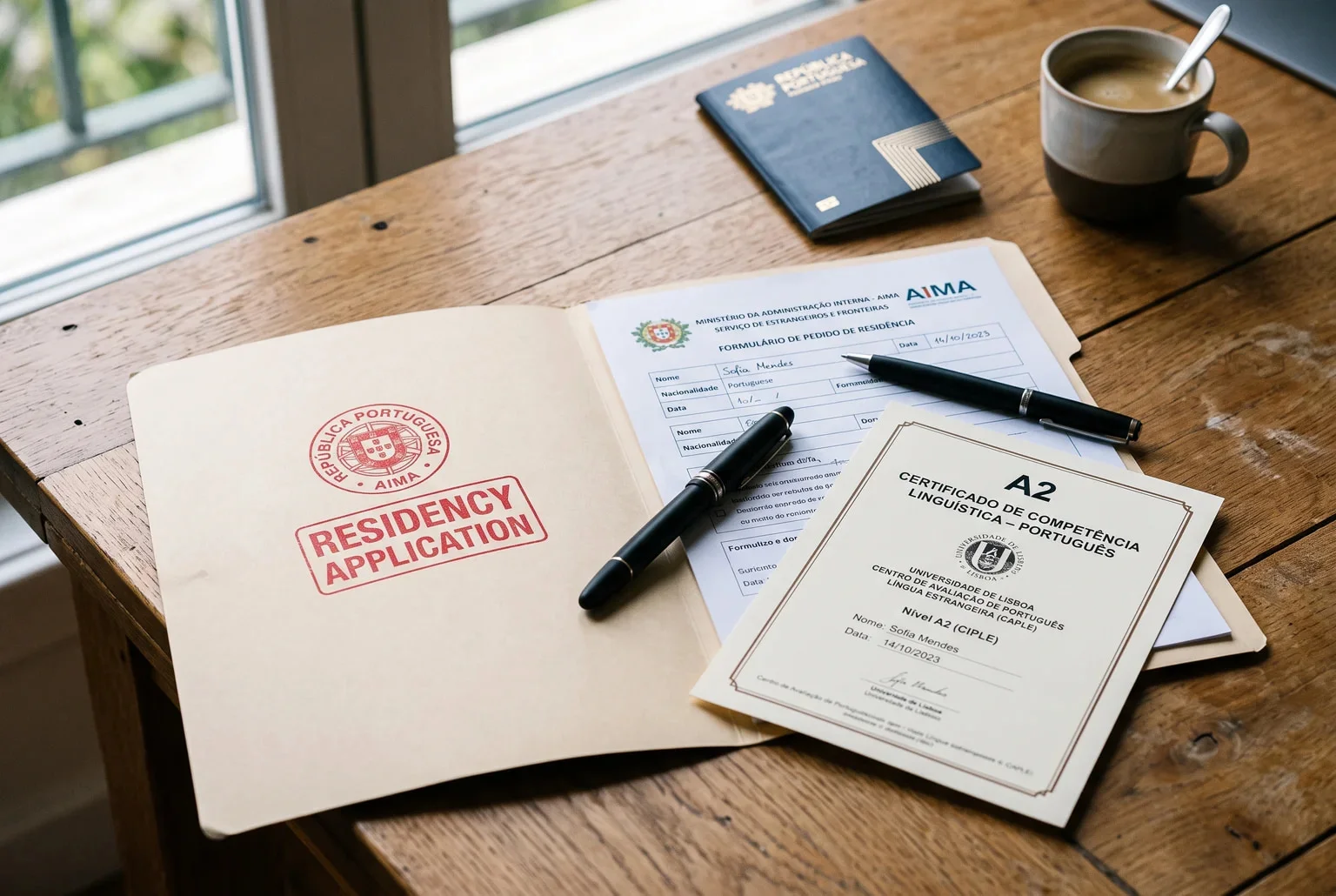
Portugal’s nationality rules require applicants in relevant naturalisation cases to show sufficient knowledge of Portuguese, and the governing regulation sets that bar at A2 under the Common European Framework of Reference for Languages. This comes from Decree-Law No. 237-A/2006, of 14 December, as amended by Decree-Law No. 26/2022, of 18 March. Article 25(2) of that regulation lists several accepted ways to prove it.
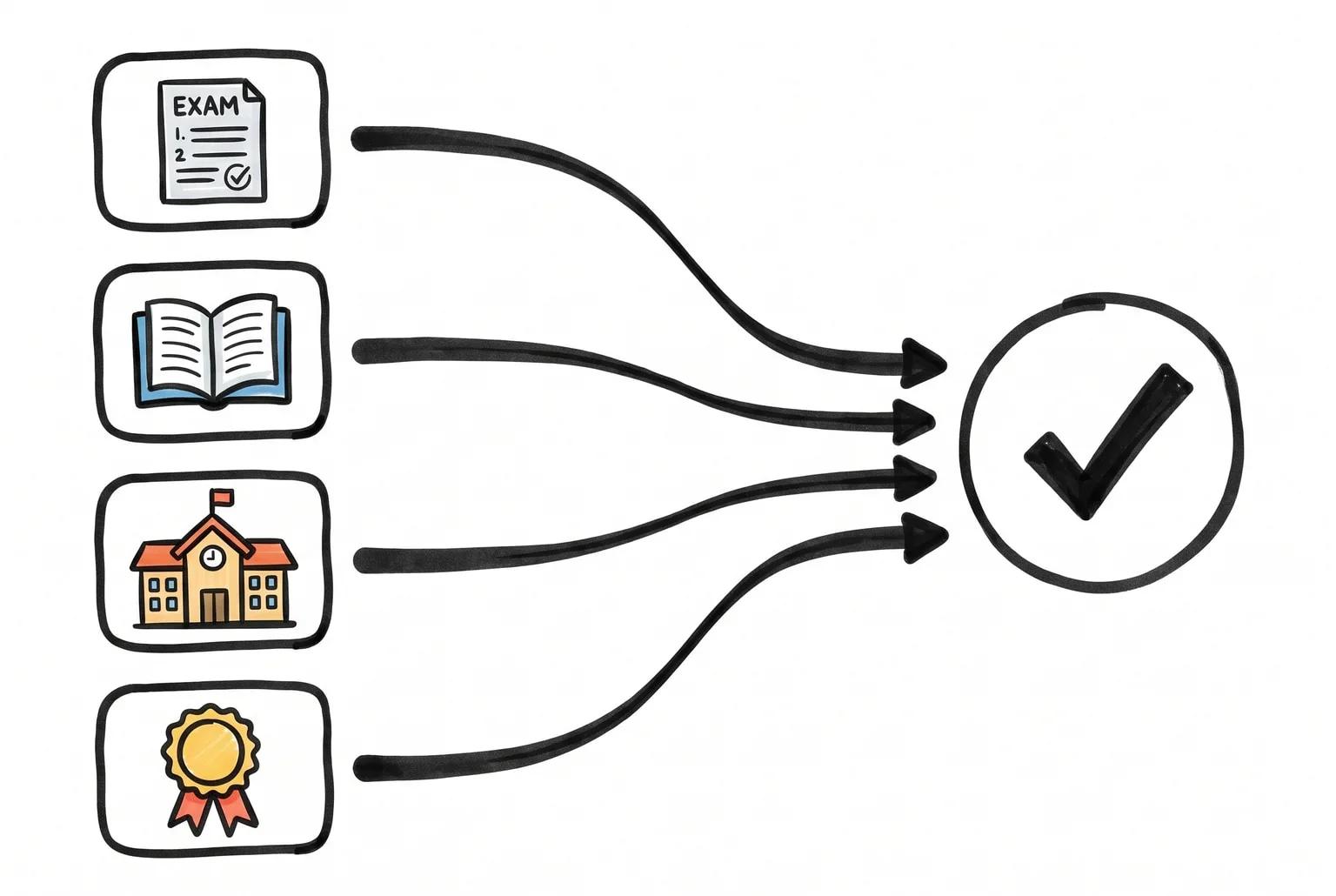
CIPLA at A2 or higher is one of the routes explicitly named in the rules as proof of “conhecimento suficiente da língua portuguesa” (sufficient knowledge of the Portuguese language) for naturalisation. It’s not the only option. The same article also accepts approval in a Portuguese-language exam held at public education establishments in Portugal or at Camões-accredited locations abroad, PLA course certificates, school records showing at least two academic years of completed Portuguese study, and qualification certificates from the National Qualifications Catalogue that include at least 100 hours of Portuguese instruction. Higher-level CAPLE certificates, such as B1 through C2, also satisfy the threshold, since they demonstrate proficiency above A2.
In practice, most applicants gravitate toward two strategies: sitting the CIPLE exam or completing an official A2-level PLA course. Both produce a document that caseworkers recognise on sight, which matters more than it sounds. Private course certificates only count if they’ve been validated, or “homologados,” by a public school or an IEFP training centre, so a certificate from an unaccredited provider can create problems even if the coursework itself was solid.
None of this settles every edge case. Which proof route applies can depend on the specific application (naturalisation versus permanent residency), and the exact documentation rules are worth confirming against the current guidance from AIMA or a legal professional before you commit time and money to one path over another.
The four skills CIPLE tests, and how the exam is split
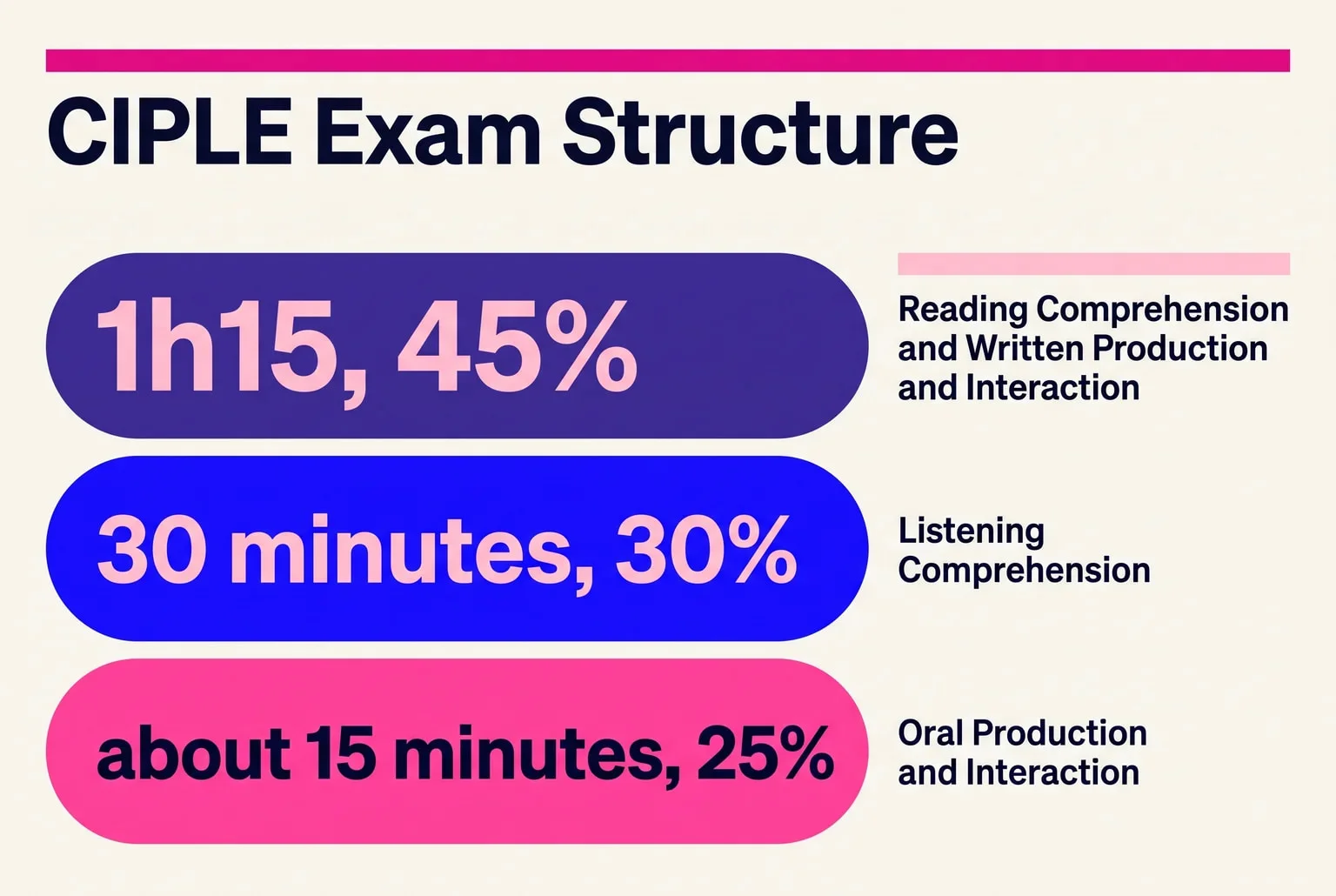
CIPLE is organised into three components covering four skills: reading comprehension, written production, listening comprehension, and oral production. According to CAPLE’s own exam page, the reading and writing portion is combined into a single written paper lasting 1 hour and 15 minutes, worth 45% of the final mark. That’s the biggest chunk of the exam, and it typically involves short, everyday texts, things like notices, ads, and simple messages, tested through multiple choice, matching, or true/false questions, followed by two short pieces of writing such as a note, email, or informal letter.
The listening component is a separate written paper of around 30 minutes, worth 30% of the score. Candidates listen to recorded dialogues, announcements, or short monologues and answer questions in a similar format to the reading section.
The oral component is worth 25% and runs about 15 minutes. CAPLE’s description of this component notes that, when possible, candidates are paired up and go through an initial warm-up interaction, a simulated everyday situation (asking for information, dealing with a service), and a short exchange on a given topic.
None of the components tests grammar or vocabulary in isolation. Everything is built around tasks A2 speakers would realistically face day to day.
What score do you actually need to pass
CIPLE doesn’t hand out a simple pass or fail. Candidates get a graded classification: Insuficiente (fail), Suficiente, Bom, or Muito Bom, based on their aggregate score across all components.
According to CIPLE.org’s breakdown of the exam, the widely cited rule is that candidates need at least 55% overall to pass, but that number alone isn’t enough. Each individual component, reading and writing, listening, and speaking, also has a minimum threshold of around 25%. Miss that floor in even one section and you fail the exam overall, no matter how well you scored elsewhere. This matters because it’s possible to ace the written paper and still fail if your oral component falls short.
Treat these percentages as a general guide rather than the final word. Scoring rules, weightings, and grade boundaries are the kind of detail that can shift between exam sessions, so confirm the current standard directly on CAPLE’s official exam page before you plan your prep around it.
Signing up for the exam
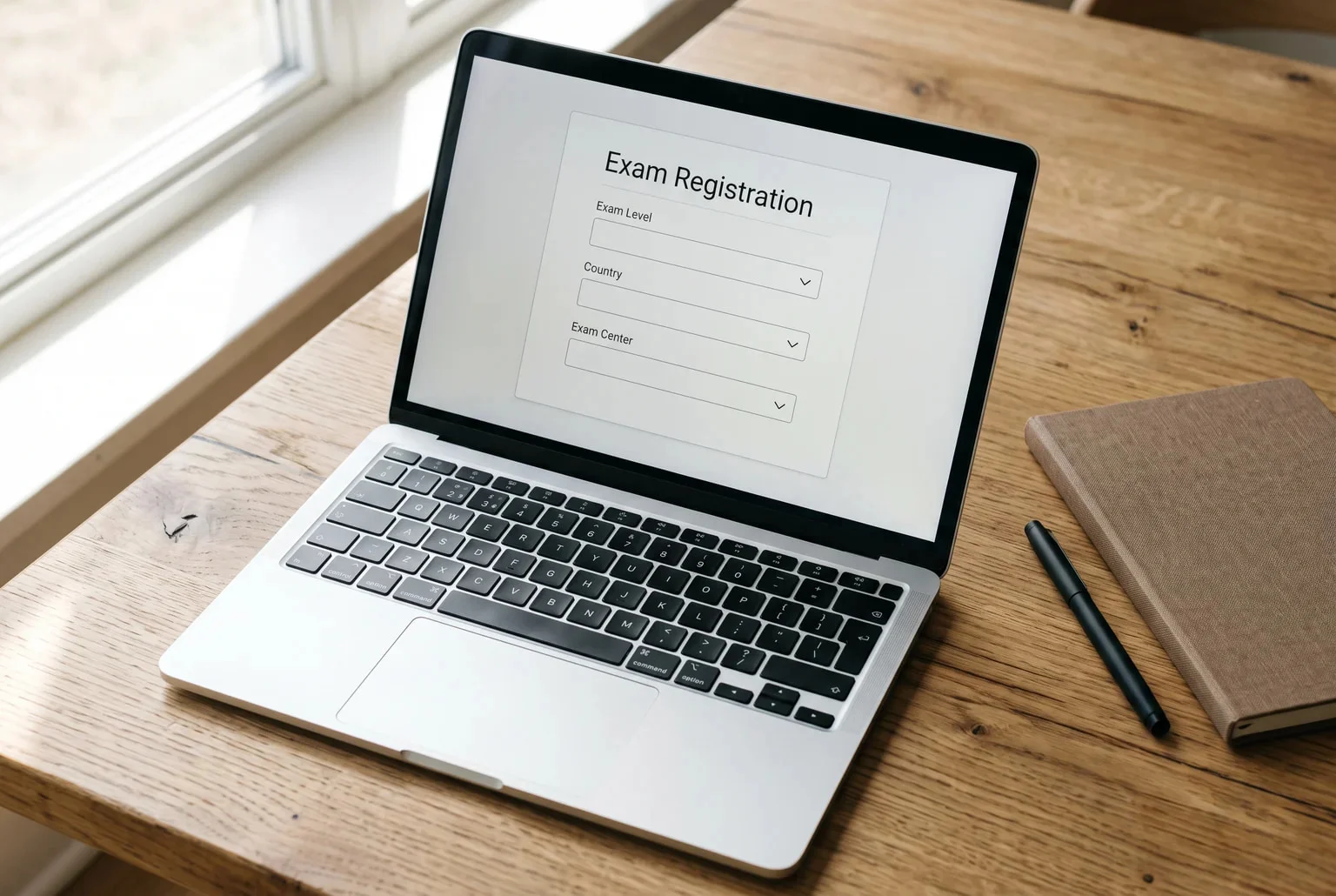
Registration happens through CAPLE’s own online portal. You pick CIPLE as the exam level, choose your country, select a LAPE (the local exam centre affiliated with CAPLE, sometimes a university or language institute), and then pick an available session. From there you fill in personal and identification details exactly as they appear on the document you’ll bring on exam day, since a mismatch can cause problems at check-in.
You’ll also need to accept CAPLE’s exam regulations before the system lets you proceed, and handle payment as instructed by your chosen LAPE. Payment methods vary by centre: some process card payments online, others ask for a bank transfer with proof sent by email. Confirm this directly with the LAPE you select rather than assuming one process applies everywhere.
Once you’ve registered, save your confirmation code and any email CAPLE or the LAPE sends you. You’ll need that identification document and confirmation details on exam day.
Fees, exact session dates, registration deadlines, and seat availability change between exam periods and between centres. None of that is fixed here on purpose. Check CAPLE’s exam pages and your chosen LAPE’s page before locking in your plans.
Where CIPLE fits among CAPLE’s six exams
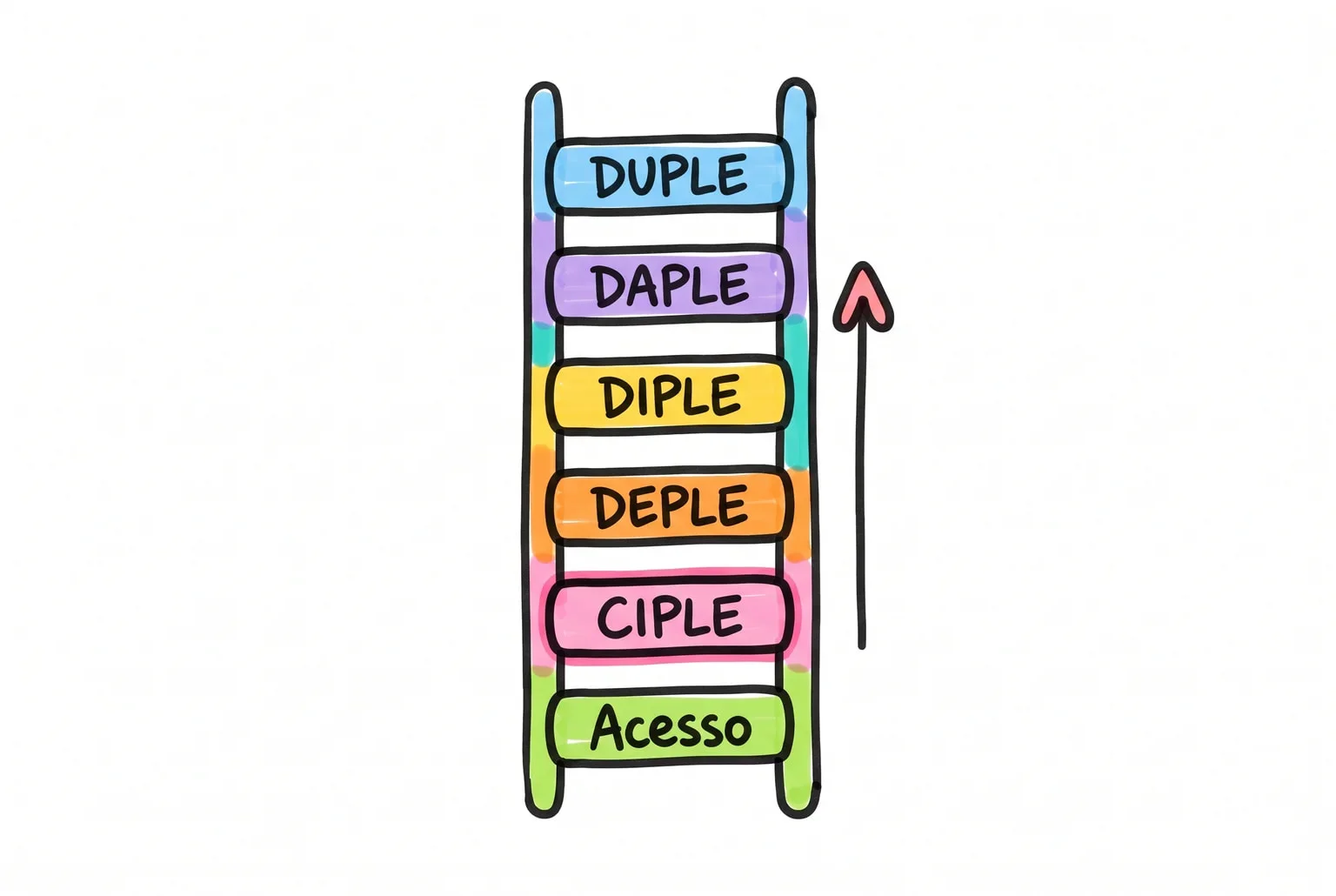
CAPLE runs a full ladder of Portuguese proficiency exams, each tied to a CEFR level: Acesso at A1, CIPLE at A2, DEPLE at B1, DIPLE at B2, DAPLE at C1, and DUPLE at C2. CIPLE, short for the Initial Certificate of Portuguese as a Foreign Language, sits near the bottom of that ladder, one step above the most basic level.
For anyone applying for Portuguese citizenship or permanent residency, that placement matters more than the exam names might suggest. The legal requirement is A2, so CIPLE is the exam to register for. DEPLE, DIPLE, DAPLE, and DUPLE test intermediate to near-native fluency and go well beyond what nationality or residency law asks for. Signing up for one of those by mistake means paying more, studying for a harder exam, and possibly missing your session date entirely.
Building an A2 study plan that actually maps to the exam
Start with the CAPLE website’s own exam example for CIPLE, which shows the real task types, timing, and format you’ll face rather than a guess at what “A2” might mean. It’s the closest thing to a walkthrough of exam day you’ll find for free.
For deeper practice, CAPLE’s resources page lists Exames de Português CAPLE-UL: CIPLE, DEPLE, DIPLE, a book by Pascoal and Oliveira published by Lidel. It includes two full sets of model tasks per exam level along with listening audio, transcripts, and answer keys, so you can check your work instead of guessing whether you got it right. Some similar model-task documents circulate online, but they aren’t official CAPLE materials, so treat them as extra reps, not a substitute for the real thing.
If self-study alone feels shaky, structured A1+A2 courses, often called PLA (Português Língua de Acolhimento), give you a classroom pace and a teacher checking your speaking and writing instead of leaving you to self-correct. Course lengths vary by provider, with some running around 150 to 175 hours combining alphabetisation and A1+A2 content. These aren’t the only route to A2, but they’re a reasonable complement to the CAPLE materials, especially if listening and speaking are your weak spots.
What to do next
CIPLE tests reading, writing, listening, and speaking at A2 level, and passing it (or completing an accredited PLA course instead) satisfies the language requirement for Portuguese citizenship and permanent residency applications. Decide first whether the exam or a course fits your schedule better, then start practising with CAPLE’s own sample materials so you know the task formats going in.
For the fees, exam dates, and registration steps that actually apply to your application, check the official CAPLE exams page directly, since those details change and this post isn’t the place to guess at them.
That’s the whole path: understand the exam, prepare with real materials, register through CAPLE, and confirm the details that matter before you commit to a date.
Sources
- CIPLE – Centro de Avaliação de Português Língua Estrangeira — CAPLE, Universidade de Lisboa
- CAPLE online registration — CAPLE / University of Lisbon
- CAPLE examinations — CAPLE / University of Lisbon